From Paperwork to Profit Centre: How Australian SMEs Are Rebuilding Procurement with AI in 2026
Procurement has finally moved out of the back office. Here's how AI sourcing, consumables strategy and supplier scorecards are reshaping Australian SME procurement — and a 90-day plan to get started.
Why Procurement Is Quietly Becoming the Highest-ROI Function in Australian SMEs
For decades, procurement in Australian small and medium businesses was treated as an administrative function — purchase orders, signatures, and a folder of supplier invoices. That view is changing fast. With margins squeezed by wage growth, energy costs, and a softer AUD against major import currencies, the buying decisions made by an SME now have a direct, measurable impact on EBITDA. A 3% reduction in cost of goods can equal a full quarter of revenue growth for a business running on thin margins.
What has changed in 2026 is that AI procurement tools — once the domain of ASX-listed enterprises with dedicated teams — are now accessible to companies with as few as 20 employees. The shift is comparable to what happened with accounting software a decade ago: a function that used to require specialists is becoming embedded in everyday operations. The difference is that procurement AI doesn't just record what happened; it actively recommends what to do next, who to buy from, and when to act.
This matters most for Australian SMEs because they operate in a market with relatively concentrated supplier bases, long lead times from overseas vendors, and compliance pressures from the ACCC and ATO that reward clean, well-documented supplier relationships. The businesses that treat procurement as a strategic function — not paperwork — are the ones pulling ahead.
Building a Sourcing Strategy That Actually Fits an SME Budget
A sourcing strategy doesn't need to be a 40-page document. For an SME, it needs to answer four questions: what are we buying, who are we buying it from, what should we be paying, and when should we re-tender. AI sourcing platforms answer all four by combining internal purchase history with external market data, then surfacing opportunities that a human buyer would simply never have time to find.
The most practical first step is spend analysis. Most SMEs we speak with at QuickSource cannot confidently say how much they spend with their top ten suppliers, let alone across long-tail categories. AI procurement tools can ingest a year of accounts payable data, classify it automatically, and produce a clean spend cube within hours. From there, the strategy writes itself: high-spend categories get re-tendered, fragmented categories get consolidated, and tail spend gets routed to preferred suppliers.
For categories where the market is competitive — packaging, freight, IT consumables, printing — a reverse auction is one of the most underused levers in Australian SME procurement. Running a 30-minute live bid event with four to six pre-qualified Australian suppliers routinely delivers 8–15% savings without damaging the relationship, because the supplier understands they are competing on transparent terms rather than being squeezed through negotiation.
Consumables Sourcing: Where the Slow Bleed Happens
Consumables are the categories that don't show up in board papers but quietly drain cash every month: gloves, labels, cleaning chemicals, PPE, stationery, printer toner, batteries, fasteners, hydraulic fluid, courier bags. Individually small, collectively they often represent 15–25% of an SME's non-payroll spend.
Consumables sourcing is hard because the items are low value per unit but high frequency. Buyers rarely have time to re-quote them, so prices drift upward through index-linked contracts, surcharges, and quiet price rises buried in supplier emails. AI procurement platforms address this by monitoring consumables spend continuously and flagging price creep against benchmark data. When the cost of nitrile gloves rises 12% in a quarter, the system tells you — it doesn't wait for an annual review.
For Australian businesses importing consumables, currency exposure is a second-order problem that often gets ignored. A platform that tracks AUD movements against the supplier's home currency can trigger forward purchasing or suggest local Australian suppliers when the import economics flip. This is the kind of decision that used to require a treasurer; it now takes a dashboard.
Supplier Management in the Age of AI Scorecards
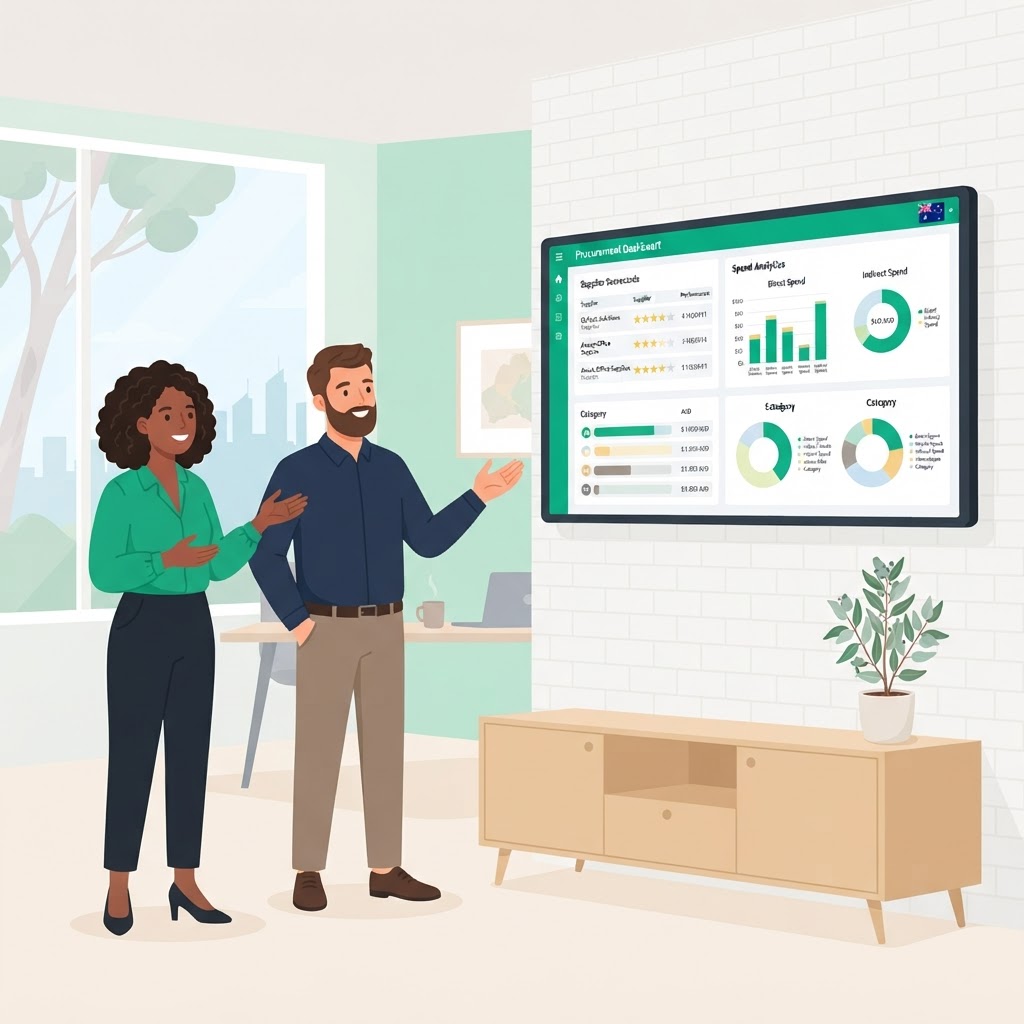
Supplier management has moved well beyond the annual review meeting. The modern approach uses a supplier scorecard that combines operational data — on-time delivery, defect rates, invoice accuracy — with commercial signals such as price stability, responsiveness to RFQs, and ESG compliance. AI procurement platforms generate these scorecards automatically from transaction data, so the buyer sees a live view rather than a snapshot.
The value isn't just in measurement; it's in action. A well-designed supplier scorecard identifies which suppliers are strategic partners worth investing in, which are transactional and should be put on competitive terms, and which are underperforming and need to be replaced. For Australian SMEs, this is especially important because switching costs — re-onboarding, re-certification, system integrations — are real. You want to make those decisions deliberately, not reactively.
There is also a compliance dimension. The ACCC has signalled increasing scrutiny of supplier conduct in supply chains, particularly around unfair contract terms and sustainability claims. A supplier scorecard that captures ESG documentation, modern slavery statements, and contract terms gives an SME a defensible position if a supplier is later found to be non-compliant. It is no longer enough to say
Topics