How AI Procurement Is Reshaping Sourcing for Australian SMEs in 2026
AI procurement is no longer just for enterprises. Here's how Australian SMEs are using AI sourcing in 2026 to cut consumables spend, find better suppliers and win back margin.
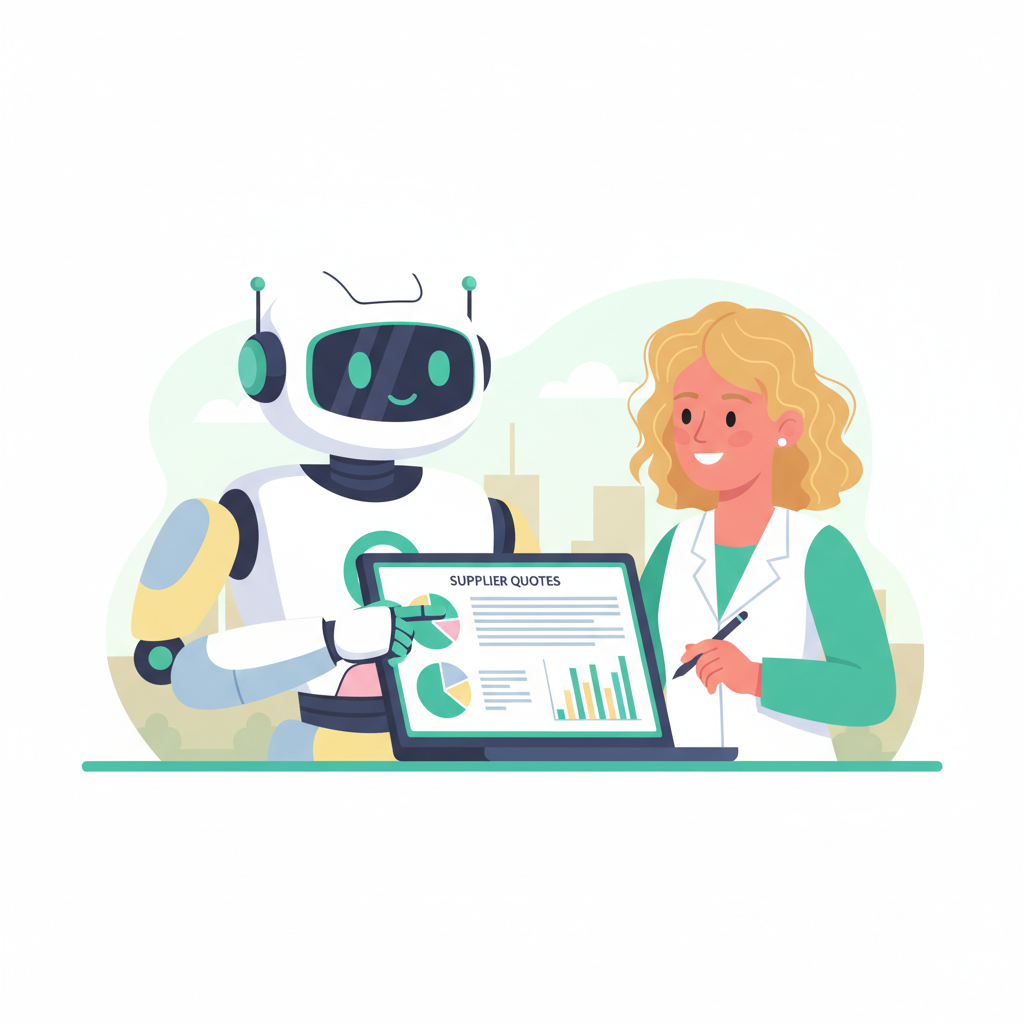
From Spreadsheets to AI Sourcing Agents
For most Australian SMEs, procurement still lives inside a tangle of email threads, supplier PDFs and one mighty Excel spreadsheet that only the office manager truly understands. In 2026, that model is finally breaking. AI procurement tools — once the preserve of multinationals with seven-figure ERP budgets — are now available on a per-seat basis, and they are quietly rewiring how small businesses buy everything from coffee beans to packaging.
The shift is being driven by three forces: cheap generative AI, mature supplier data on the open web, and Australian SMEs running out of patience with rising consumables prices. According to the ACCC's most recent small-business cost reports, input costs for everyday consumables have outpaced CPI for the past three years. AI sourcing is how SMEs are closing that gap without hiring a full procurement team.
What "AI Procurement" Actually Means in Practice
The phrase gets thrown around loosely, so let's get specific. In an Australian SME context, AI procurement generally covers four jobs:
- Spend analysis — an AI agent reads your invoices, categorises spend by item, and flags categories where you are overpaying compared to market benchmarks.
- AI supplier discovery — instead of Googling for hours, you describe what you need and the AI returns a shortlist of suppliers with reviews, certifications and approximate pricing.
- Quote generation and scoring — AI drafts the RFQ, sends it to suppliers, and uses a supplier scorecard to evaluate responses against your weighted criteria.
- Reverse auctions / live bidding — for commoditised consumables, AI runs a short reverse auction where invited suppliers compete on price in real time.
The magic isn't any single feature — it's that all four jobs now talk to each other. Spend analysis identifies the category, AI supplier discovery fills the pipeline, the scorecard ranks responses, and the auction drives the final price. What used to take a procurement team six weeks now takes one afternoon.
The Australian Context: Why 2026 Is the Tipping Point
Three local factors are accelerating adoption. First, the ATO's continued push toward eInvoicing (PEPPOL) means more SMEs have structured invoice data — exactly what AI agents need to do spend analysis. Second, energy and logistics costs across Australia remain volatile, so even a 5–8% saving on consumables shows up clearly on the P&L. Third, supplier networks have consolidated in some categories (think packaging or PPE), and SMEs need better tools just to maintain leverage at the negotiation table.
QuickSource customers tell us the typical first year saving on indirect consumables sits between 7% and 14%, with the larger savings coming from categories that have never been formally tendered before — cleaning products, office supplies, MRO items, and uniforms.
Three Quick Wins Australian SMEs Are Capturing Right Now
1. Re-quoting Stale Categories
Most SMEs have at least one supplier they have used "forever" without re-quoting. An AI agent can run a live bidding event on that category in under 48 hours. Even keeping the incumbent, the threat of competition typically yields a 4–9% discount.
2. Consolidating Tail Spend
Tail spend — the long tail of low-value, high-frequency purchases — is where AI procurement shines. Instead of negotiating each PO, you let the AI bundle similar items and award a 12-month rate to a single supplier.
3. Adding a Supplier Scorecard Layer
Price isn't everything. A simple AI supplier scorecard that weighs delivery reliability, ESG credentials and warranty terms helps SMEs avoid the false economy of buying from the cheapest supplier who then misses every deadline.
What to Look for in an AI Procurement Platform
If you're evaluating tools in 2026, keep the checklist short and brutal: Does it work without an ERP? Is it priced for an SME (not a Fortune 500)? Does it run on Australian data and Australian suppliers? Can it produce a defensible audit trail for your bookkeeper or auditor? Anything that fails those four tests is not built for the Australian SME market, no matter how impressive the demo looks.
Conclusion
AI sourcing is finally living up to the hype — not because the models got smarter overnight, but because the workflows around them finally make sense for small businesses. Australian SMEs who adopt AI procurement in 2026 will spend less, find better suppliers and free their teams from the spreadsheet treadmill. The competitive gap between AI-enabled and manual procurement is widening every quarter; the question is no longer if, but which platform.
Topics